
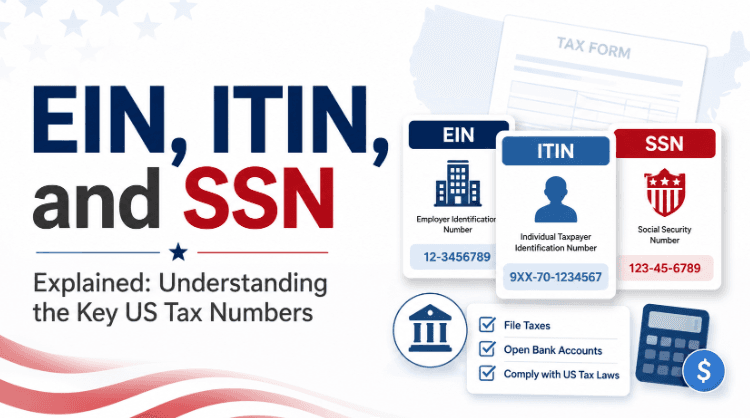
EIN, ITIN, and SSN Explained: Understanding the Key US Tax Numbers
Three nine-digit numbers can look almost identical, yet choosing the wrong one can delay taxes or business paperwork. This guide to EIN, ITIN, and SSN explained shows what each number means and who needs it. Think of them as three keys: one for a business, one for certain tax filers, and one for an eligible individual.
EIN, ITIN, and SSN Explained Simply
EIN: An Employer Identification Number, or EIN, is a federal tax ID for businesses and other entities. The IRS issues it free. It may be used for tax returns, payroll, and business records. For example, Maya forms an LLC and hires an employee. Her EIN acts like the company’s tax account number. ITIN : An Individual Taxpayer Identification Number, or ITIN, is for federal tax purposes. The IRS issues it to people who need a US taxpayer number but cannot get an SSN. Applicants normally use Form W-7. Imagine Carlos earns US rental income while living abroad. An ITIN may help him file a return. It does not give permission to work in the United States. SSN: A Social Security number, or SSN, is assigned by the Social Security Administration. It records earnings and is widely used for employment and tax reporting. In general, noncitizens need permission to work from the Department of Homeland Security to receive one for work. For example, Priya starts an authorized US job. Her employer uses her SSN to report wages. What Is the Main Difference? Match each number to its owner: It is like labeling three folders: business, tax-only individual, and Social Security individual. Similar format, different purpose.
- EIN: A business or organization
- ITIN: A tax filer who cannot get an SSN
- SSN: An eligible individual
Which US Tax Number Do You Need?
Starting a business? Check whether you need an EIN. Filing taxes without SSN eligibility? Review the ITIN rules. Eligible for an SSN? Apply through the SSA. For instance, a foreign founder may need an EIN for the company and an ITIN for personal tax filing. One number does not replace another. In short, EIN, ITIN, and SSN explained correctly can prevent paperwork mistakes. Choose the number that fits your situation, and confirm uncertain cases with the IRS, SSA, or a qualified tax professional. Tags for SEO: EIN ITIN and SSN explained, US tax numbers, taxpayer identification number, federal tax ID, Employer Identification Number, Individual Taxpayer Identification Number, Social Security number, EIN vs ITIN, ITIN vs SSN, how to get an EIN, how to apply for an ITIN, US business taxes, IRS tax ID, tax numbers for nonresidents